- Nandoshi - Pune - 411024
- +91 - 97641 13247
- AESPL4@GMAIL.COM

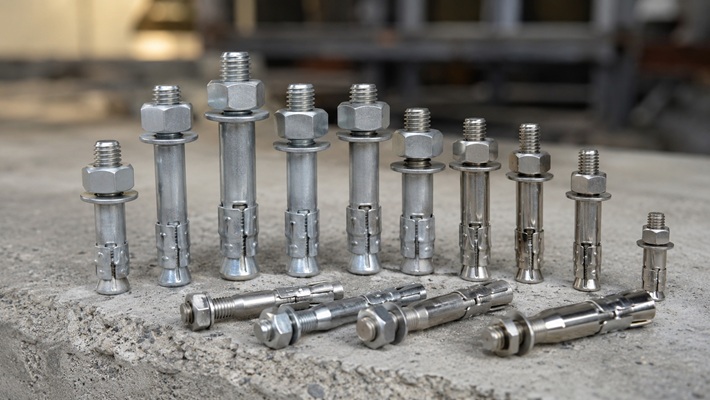
The best anchor bolt for concrete depends on three things: your load (light, medium, or heavy duty), your environment (indoor, outdoor, or corrosive), and your concrete type (slab, RCC foundation, or masonry block). Wedge type and pin type anchor bolts handle the heaviest industrial loads. For outdoor or coastal installations in India, always specify hot-dip galvanized or SS 316 material. Use this guide to match the right anchor bolt to your project requirements, IS standards, and site conditions.
A conveyor frame in an industrial plant. A column base plate in a pre-engineered building. A heavy pump foundation in a process facility. In every one of these situations, a single component holds everything together: the anchor bolt embedded in concrete.
Most online guides on this topic are written for US DIY projects or light commercial work. They talk about hanging shelves and mounting electrical fixtures. They don’t talk about IS 1367, Grade 8.8 bolts, monsoon corrosion, or securing a 10-tonne machine to an RCC floor.
This guide is different. It’s written for site engineers, procurement managers, and project contractors working on real industrial and infrastructure projects in India. You’ll get a clear breakdown of every major anchor bolt type, a practical selection guide, and specific advice for concrete slabs, outdoor use, and heavy-duty applications.
By the end of this post, you’ll know exactly which anchor bolt to specify, in what material grade, and why.
An anchor bolt is a fastener designed to connect structures, equipment, or fixtures to hardened concrete. Unlike foundation bolts (which are cast into wet concrete before pouring), anchor bolts are installed after the concrete has cured. They work by expanding inside a pre-drilled hole, gripping the concrete walls from the inside and creating a secure hold.
The basic installation process has three steps:
That last step is the key. The expansion is what provides the holding force. Different anchor types use different expansion mechanisms, and that’s what determines their strength, suitability, and application.
Anchor bolt vs foundation bolt: what’s the difference?
This is one of the most commonly confused points in Indian construction. A foundation bolt is placed inside the formwork before concrete is poured. It becomes permanently embedded as the concrete sets around it. An anchor bolt, by contrast, goes into concrete that has already hardened. Both serve the purpose of anchoring structures to concrete, but the installation method, design, and application are different. For most post-construction equipment mounting and structural connections, anchor bolts are the practical choice.
There are eight main types of anchor bolts used in concrete construction and industrial installations. Each one is designed for a specific load range, concrete type, and application. Here’s a practical overview.

The wedge type anchor bolt is the most widely used anchor for heavy-duty concrete applications. It consists of a threaded stud with a wedge-shaped clip at the bottom. When you tighten the nut, the wedge expands outward and bites into the concrete walls. This creates extremely high pull-out and shear resistance.
Wedge anchors are suitable for:
They work best in solid, uncracked concrete. They are available in carbon steel, zinc-plated, hot-dip galvanized, SS 304, and SS 316 depending on the environment.
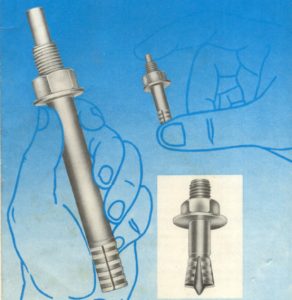
The pin type anchor bolt is designed for high-vibration environments. It uses a pin-and-sleeve mechanism that locks securely without loosening under dynamic loads. This makes it particularly useful in cement plants, steel mills, and process industries where machinery vibration is a constant factor.
A drop-in anchor is an internally threaded sleeve that sits flush with the concrete surface after installation. It needs a setting tool to expand. Because the anchor sits below the surface, it leaves no protrusion, which makes it ideal for floor-mounted equipment, suspended ceiling systems, and applications where a flush finish is needed.
Drop-in anchors work only in solid, uncracked concrete. They are commonly used in concrete slabs and RCC walls.
A sleeve anchor is a versatile option. It works across multiple base materials: solid concrete, hollow block, brick, and stone. The outer sleeve expands as the inner bolt is tightened. Sleeve anchors are available in hex-head, flat-head, and round-head styles. They handle light to medium-duty loads well, and their removability makes them suitable for temporary or adjustable installations.
For very heavy loads, cracked concrete, or structural connections, a chemical anchor is often the best solution. You drill the hole, inject epoxy or resin into it, insert a threaded rod, and let it cure. The chemical bond is extremely strong and distributes load over the full embedment length. This method is used in bridge repair, seismic-zone construction, and heavy structural retrofits. Curing time varies by product, typically 30 minutes to 24 hours depending on ambient temperature.
A light-duty option for indoor use. These are simple expanding anchors that accept standard machine screws. They’re suitable for mounting electrical conduit, junction boxes, or cable trays to concrete walls. Not suitable for outdoor environments or any significant load.
Concrete screws cut their own thread directly into the pre-drilled hole. No separate anchor body is needed. They’re fast to install and removable, making them ideal for light, non-critical connections like securing cable channels or small fixtures to concrete.
Plastic anchors are the lightest-duty option. They expand as a screw is driven in. They’re used for very light loads such as signage, small brackets, or cable clips on concrete walls. They should never be used for structural, machinery, or outdoor applications.
| Type | Load Duty | Best Base Material | Removable? | IS / DIN Reference |
|---|---|---|---|---|
| Wedge Type Anchor | Heavy | Solid Concrete | No | DIN 529 / IS 5624 |
| Pin Type Anchor | Heavy | Solid Concrete | No | IS 5624 |
| Drop-In Anchor | Medium–Heavy | Solid Concrete Only | No | — |
| Sleeve Anchor | Light–Medium | Concrete, Masonry, Brick | Yes | — |
| Chemical / Threaded Rod | Very Heavy | Solid / Cracked Concrete | No | ASTM A193 |
| Machine Screw Anchor | Light | Concrete, Masonry, Stone | Yes | — |
| Concrete Screw | Light–Medium | Concrete, Masonry | Yes | — |
| Plastic Anchor | Very Light | Concrete, Brick, Masonry | Yes | — |
For concrete slab applications, the best anchor bolt depends on your load and installation direction. For surface-mounted heavy loads on an RCC slab, use a wedge type anchor bolt. For flush-mount or overhead suspended loads (such as equipment hangers or cable trays from a slab ceiling), use a drop-in anchor.
Here’s how to think about it:
Surface mounting on a slab floor (heavy load): Wedge anchor is the right choice. It provides high shear and tensile resistance and is easy to install with a standard hammer drill.
Overhead or ceiling mounting from a slab: Drop-in anchor is preferred. It sits flush, accepts a threaded rod or bolt, and is designed specifically for this configuration. Always use a setting tool to ensure proper expansion.
Light fixtures, cable trays, or small brackets on slab walls: Sleeve anchor or concrete screw handles this well.
One important detail for slab applications: always check the slab thickness before specifying embedment depth. Most wedge anchors require a minimum embedment of 5–10 times the bolt diameter. For a standard M12 wedge anchor, you need at least 60–90 mm of concrete below the anchor tip. Thin slabs may not provide enough depth for reliable holding.
For cracked concrete slabs (common in older industrial buildings), standard expansion anchors may not perform reliably. In that case, a chemical anchor with epoxy grout is the safer and stronger choice.
For outdoor applications in India, the anchor bolt material is just as important as the type. Standard zinc-plated carbon steel anchor bolts will degrade quickly in Indian conditions. India’s monsoon humidity, coastal salt air, and industrial pollution create a corrosive environment that destroys unprotected steel within one to two seasons.
Here’s how to choose the right material based on your site:
Inland outdoor locations (gardens, industrial yards, infrastructure): Hot-dip galvanized (HDG) anchor bolts are a cost-effective and durable choice. The thick zinc coating (typically 45–85 microns) provides long-term protection against moisture and mild atmospheric corrosion.
Coastal areas (within 5 km of the sea) or chemical plant environments: Use SS 316 stainless steel anchor bolts. SS 316 contains molybdenum, which gives it superior resistance to chloride (salt) and chemical attack compared to SS 304. SS 304 is acceptable for moderate humidity but will pit over time in coastal or acidic environments.
Indoor dry environments: Carbon steel with zinc plating is sufficient and cost-effective.
Temperature-cycling environments (outdoor equipment bases exposed to sun and rain): Use HDG bolts with a thread lubricant to prevent galling. Thermal expansion and contraction can loosen anchor nuts over time, so check torque annually for critical connections.
The IS 1367 Part 3 standard specifies the mechanical and corrosion protection requirements for fasteners used in Indian construction. Specifying to this standard ensures the bolts you receive meet tested performance benchmarks.
In industrial settings, “heavy duty” means loads above 500 kg, sustained dynamic loads from rotating machinery, or structural connections that must remain stable for the life of the plant. This is where standard retail anchors don’t belong.
Here’s what Aim Tech’s manufacturing clients and project teams typically specify for different industrial applications:
| Application | Recommended Bolt Type | Grade | Material |
|---|---|---|---|
| Cement Plant Machinery Base | Wedge Type Anchor | Grade 8.8 | HDG or SS 304 |
| PEB Column Base Plate | Heavy Duty Foundation Bolt | Grade 8.8 / 10.9 | HDG |
| Steel Mill Equipment Mounting | Pin Type Anchor Bolt | Grade 8.8 | Carbon Steel (Indoor) |
| Conveyor Frame on RCC Slab | Wedge Type Anchor | Grade 8.8 | HDG (If Outdoor Exposure) |
| Process Pump Foundation | Chemical Anchor + Threaded Rod | Grade B7 (ASTM A193) | SS 316 for Chemical Zones |
| Telecom Tower Base | Heavy Duty Foundation Bolt | Grade 10.9 | HDG |
| Sugar Industry Equipment | Medium Duty Foundation Bolt | Grade 8.8 | SS 304 or HDG |
For vibration-heavy applications like rotating equipment (motors, compressors, crushers), pin type anchor bolts are a better choice than standard wedge anchors. The pin-and-sleeve mechanism resists loosening under dynamic load, which is a real failure mode for machinery anchors in heavy industry.
For very high-load structural connections, always consult the equipment manufacturer’s foundation drawing. The drawing will specify the bolt diameter, embedment depth, grade, and material. Fabricating to that drawing, rather than substituting a generic anchor, is the correct approach.
Choosing the right anchor bolt isn’t complicated once you know what to look for. Here are five factors that determine the correct specification every time.
Identify whether your load is:
Also consider whether the load is static (constant weight) or dynamic (vibration, impact, cycling). Dynamic loads need stronger anchors with better vibration resistance.
Is your concrete:
Use the material selection guide from the previous section. Indoor dry = carbon steel. Outdoor = HDG. Coastal or chemical = SS 316.
Consider whether:
For projects in India, specify bolts that comply with the relevant Indian and international standards:
Always ask your supplier for a mill test certificate. This confirms that the bolts were tested to the specified grade and material composition.
If you’re sourcing anchor bolts for an Indian project, here’s what you need to know before placing an order.
Grade selection guide:
What to specify when ordering:
To get the right anchor bolt fabricated to your exact requirements, provide the following information:
If your project has a non-standard requirement (unusual length, custom bend, special head configuration), Aim Tech manufactures anchor bolts and foundation bolts to customer drawings and specifications. You can refer to the how to order guide on our website for a full checklist.
What ISO 9001:2015 certification means for you:
An ISO-certified manufacturer follows documented quality procedures at every stage: raw material inspection, in-process control, dimensional checking, and final testing. When you order from an ISO 9001:2015 certified supplier, you’re not just buying a bolt. You’re buying a traceable quality process. Always verify the certificate is current and covers the product category you’re ordering.
Red flags when sourcing anchor bolts in India:
If a supplier can’t answer a question about the material grade or standard, that’s a sign to look elsewhere.
Choosing the best anchor bolt for concrete comes down to three decisions: the right type for your load and concrete, the right material for your environment, and the right grade for your application.
For heavy industrial applications in India, wedge type and pin type anchor bolts in Grade 8.8 or 10.9 are the workhorses. For outdoor and coastal sites, hot-dip galvanized or SS 316 material is the minimum acceptable specification. And for any project that goes through BIS-compliant procurement, always verify IS 1367 and IS 5624 compliance with a mill test certificate.
Getting this specification right at the project planning stage is far easier and far cheaper than a field failure or a rework on a commissioned plant.
Need anchor bolts manufactured to your project drawing or specification? Aim Tech Engineering supplies wedge type anchor bolts, pin type anchor bolts, and heavy duty foundation bolts to IS, ASTM, and DIN standards from our Pune facility. Contact us to discuss your project requirements.
For heavy machinery foundations on concrete floors, wedge type anchor bolts in Grade 8.8 are the standard choice for most industrial applications. For high-vibration equipment such as motors, compressors, or crushers, pin type anchor bolts provide better resistance to dynamic loosening. Specify hot-dip galvanized finish for outdoor or damp industrial environments. Always follow the equipment manufacturer’s foundation drawing for the correct diameter, embedment depth, and bolt layout.
An anchor bolt is installed into hardened (already-cured) concrete by drilling a hole and using an expansion or chemical mechanism to grip the concrete. A foundation bolt is cast into wet concrete before pouring, and it becomes permanently embedded as the concrete cures around it. Foundation bolts are typically used for heavy structural connections like column base plates in PEB structures and industrial plant foundations. The key difference is the installation method: post-installed vs cast-in-place.
No. Standard zinc plating (electroplated, typically 5–15 microns) degrades quickly under Indian outdoor conditions. Monsoon humidity, UV exposure, and industrial atmosphere will cause visible rust within one to two seasons. For outdoor concrete anchoring in India, specify hot-dip galvanized (HDG) anchor bolts as a minimum. For coastal locations or chemical plant environments, use SS 316 stainless steel, which resists chloride and chemical corrosion far better than any zinc coating.
Two standards are most relevant. IS 5624 covers the dimensional specifications for foundation bolts used in Indian construction (available from the Bureau of Indian Standards). IS 1367 Part 3 specifies the mechanical properties (tensile strength, proof load, hardness) for fasteners including anchor bolts. For high-strength applications in process industries, ASTM A193 (Grade B7) is frequently specified alongside or in place of IS standards for threaded rod and stud bolt applications.
Anchor bolt size depends on three things: the load (tensile and shear), the required embedment depth for the concrete type and grade, and the base plate hole diameter or fixture requirement. For structural applications, a civil or structural engineer should calculate the minimum bolt diameter and embedment based on IS 456 (plain and reinforced concrete code) and the equipment load data sheet. For general guidance, most machinery manufacturers provide a foundation drawing with exact bolt specifications. If you’re working without a drawing, start with the equipment weight and add a safety factor, then consult a structural engineer for verification.