- Nandoshi - Pune - 411024
- +91 - 97641 13247
- AESPL4@GMAIL.COM


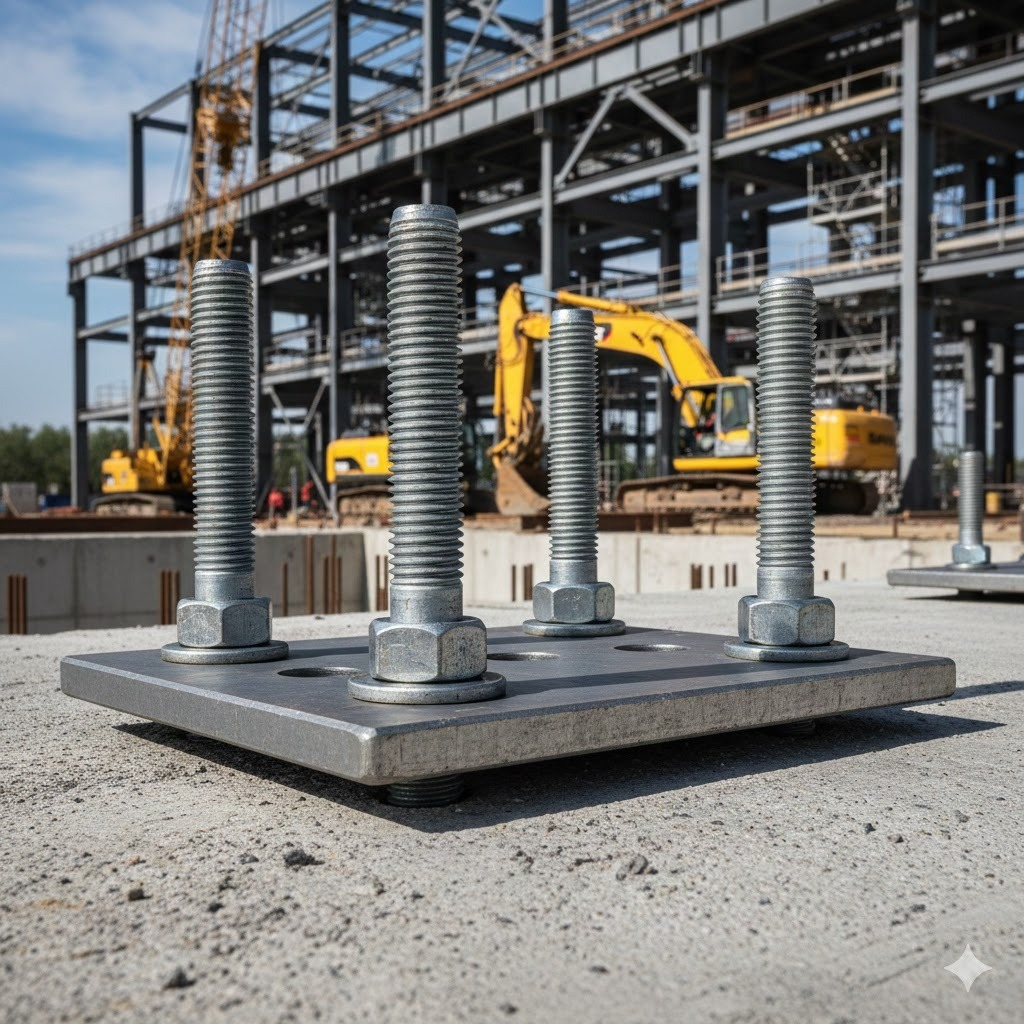
Concrete foundations are often poured under tight timelines. In some cases, anchor bolts may be missed, misplaced, or need repositioning due to design changes or new equipment requirements. This creates a common and practical question on construction and industrial sites: can anchor bolts be installed after concrete is poured ?
The answer is yes. Anchor bolts can be installed in hardened concrete using post-installed anchoring methods. However, correct anchor selection, material quality, and installation technique are essential to ensure load capacity, safety, and long-term performance.
Concrete anchor bolts are mechanical fasteners used to secure structures, machinery, and equipment to concrete foundations. They transfer applied loads safely from the structure into the concrete.
Their performance depends on load-bearing capacity, embedment depth, material strength, and corrosion resistance. High-quality anchor bolts are typically manufactured using Mild Steel (MS), Engineering Steel (EN), or Stainless Steel (SS) to withstand tension, shear forces, vibration, and environmental exposure.
A detailed range of industrial-grade Anchor Bolts used for concrete applications can be viewed here :
In new construction, anchor bolts are commonly installed using the cast-in-place (wet-set) method. In this approach, anchor bolts are positioned before concrete placement and become embedded as the concrete cures.
However, cast-in-place installation offers limited flexibility. If bolt locations are incorrect or project requirements change later, post-installed anchor bolts become necessary.
In new construction, anchor bolts are commonly installed using the cast-in-place (wet-set) method. In this approach, anchor bolts are positioned before concrete placement and become embedded as the concrete cures.
| Feature | Cast-in-Place Anchor Bolts | Post-Installed Anchor Bolts |
|---|---|---|
| Installation Timing | Before concrete curing | After concrete hardening |
| Load Transfer | Direct embedment | Mechanical expansion or chemical bonding |
| Flexibility | Limited after pouring | High flexibility |
| Typical Use | New construction | Retrofits, modifications, repairs |
Post-installed anchor bolts allow corrective action without breaking or recasting concrete, making them practical for real-world site conditions.
These situations occur frequently in operational facilities and renovation projects.
Expansion anchor bolts work by mechanical expansion against the walls of a drilled hole. When tightened, they create friction that holds the anchor securely in concrete.
Limitations :
Not recommended for cracked or low-strength concrete or high dynamic loads.
Chemical / Resin Anchor Bolts
Chemical anchor bolts use resin or epoxy bonding to secure the bolt inside drilled holes. This method provides high pull-out resistance and excellent performance under vibration.
Proper hole cleaning and full curing time are essential for reliable performance.
The correct selection depends on load requirements, environmental conditions, and installation constraints. Professionally manufactured anchor bolts ensure dimensional accuracy and consistent performance:
Each step directly affects anchoring strength and reliability.
There is no single standard depth suitable for all applications. For structural or heavy-load installations, embedment depth should be determined using engineering guidelines or professional evaluation.
Selecting the right anchor bolt is as important as correct installation.
These issues can significantly reduce anchoring performance and safety.
In such cases, engineering consultation is essential.
Anchor bolts can be installed after concrete is poured when proper post-installed methods are used. Correct anchor selection, material quality, and installation practices ensure reliable load performance and long-term safety.
For industrial applications, using precision-engineered anchor bolts manufactured to recognized standards is critical for dependable anchoring solutions.