July 2, 2026 Comments (0)

Eye Bolt vs U Bolt: Key Differences, Uses & Safety Guide

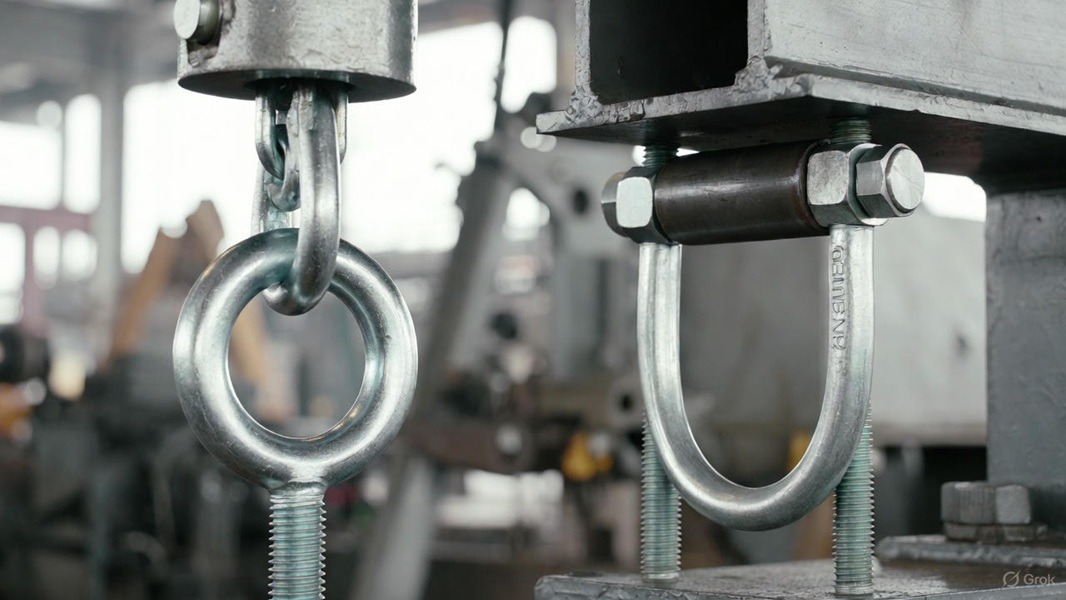
Picture this: a heavy load is being lifted on site, the rigging looks fine, but suddenly the fastener slips. The lift stops, work is delayed, and safety is compromised all because the wrong bolt was used. This situation is more common than it should be. Many teams confuse lifting fasteners with clamping fasteners, especially when choosing between eye bolts and U bolts.

Understanding the difference between an eye bolt and a U bolt can save time, prevent costly rework, and reduce serious safety risks. While both are widely used industrial fasteners, they serve very different purposes. In this guide, we break down their design, uses, materials, performance, and safety considerations so you can confidently choose the right fastener for your application.
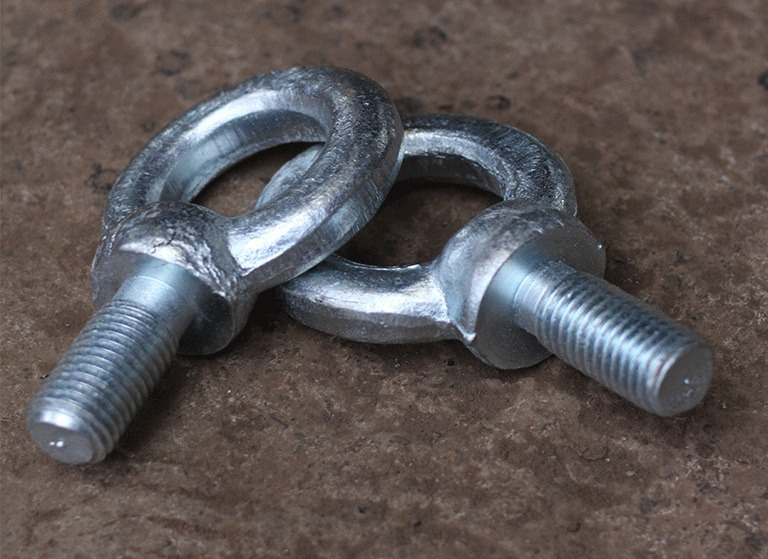
What Is an Eye Bolt? Design, Types, and Core Functions

Eye Bolt

An eye bolt is a fastener with a threaded shank and a closed loop, or “eye,” at one end. The eye provides a secure attachment point for hooks, chains, wire ropes, or slings, making eye bolts ideal for lifting and rigging applications.

Anatomy of an Eye Bolt :
  • Eye : Forged or swaged loop designed to handle tensile loads
  • Shank : Threaded portion that screws into a tapped hole or nut
  • Shoulder (optional) : Provides support for limited angular lifting
Common Types of Eye Bolts :
  • Shoulder eye bolts : Suitable for vertical and limited angled lifts
  • Lifting eye bolts (DIN 580) : Designed specifically for overhead lifting
  • Machinery eye bolts : Used for handling and positioning equipment.
Materials Used :
  • • Mild Steel (MS)
  • • Engineering Steel (EN grades)
  • • Stainless Steel (SS 304 / SS 316) for corrosion resistance
Typical Specifications (Indicative) :
  • • Sizes: M6 to M64
  • • Working Load Limit (WLL): Depends on size, material, and angle of lift

Eye bolts are primarily used where loads need to be lifted, suspended, or anchored in a controlled and safe manner.
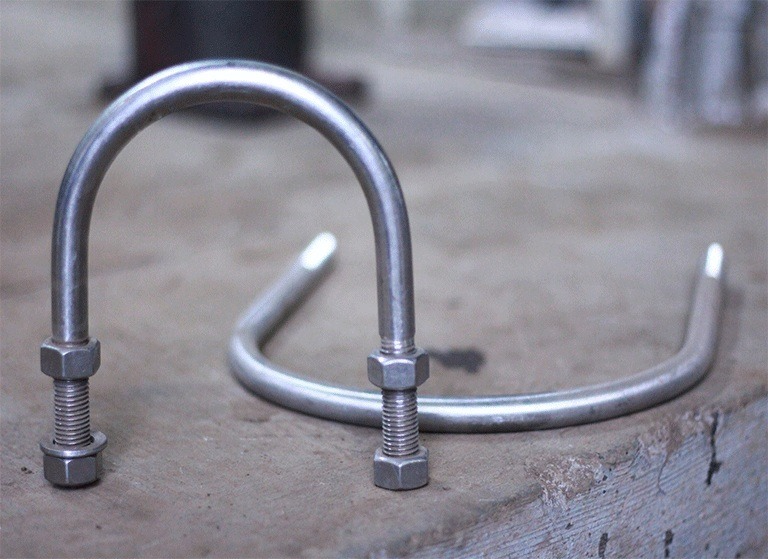
What Is a U Bolt? Design, Types, and Core Functions

U Bolts

A U bolt is a U-shaped rod with threads on both ends, typically supplied with nuts and sometimes a saddle plate. U bolts are designed to encircle and secure pipes, tubes, or round components to a structure.

Anatomy of a U Bolt :
  • Legs : Parallel or slightly tapered threaded ends
  • Bend radius : Matches the outer diameter of the pipe or tube
  • Optional saddle plate : Distributes clamping force evenly
Common Types :
  • Standard U bolts : For pipe and conduit fastening
  • Two-bolt pipe clamps : Used in plumbing and industrial piping
  • U clamp variants : Common term in India for U bolts used as supports
Materials Used :
  • • Mild Steel (MS)
  • • Galvanized Iron (GI)
  • • Stainless Steel (SS)
  • • High-tensile grades (4.6 / 8.8 and above)
Typical Specifications :
  • • Sizes: M6–M100 or 1/4"–4"
  • • Designed to match specific pipe outer diameters

Note : On foundationbolts.net, U bolts are referred to as U Clamps, which is a common industry synonym.

U bolts are not designed for lifting. Their role is clamping, holding, and supporting components securely in place.

Key Differences Between Eye Bolts and U Bolts: A Head-to-Head Comparison

Feature Eye Bolts U Bolts
Shape Closed loop with threaded shank U-shaped rod with two threaded ends
Primary Use Lifting, rigging, anchoring Securing pipes, tubes, structures
Load Direction Inline or angled (with shoulder) Radial compression around objects
Load Rating Lifting-rated WLL (0.5–10+ tons) Designed for hold-down, vibration
Installation Screws into tapped hole Encircles object, tightened with nuts
Materials MS, EN steel, SS MS, GI, SS
Standards DIN 580, ASME IS 1367, ASTM, DIN
Safety Role Critical lifting component Structural support component

Pro Tip : Never use eye bolts to secure pipes or U bolts for lifting loads. Each is engineered for a specific load behavior, and misuse can lead to shear failure or slippage.

Best Applications: When to Choose Eye Bolts Over U Bolts (and Vice Versa)

Use Eye Bolts When :
  • • Lifting machinery or equipment
  • • Rigging and hoisting operations
  • • Marine and offshore lifting points
  • • Temporary anchoring during installation
Use U Bolts When :
  • • Securing pipes in plumbing, gas, or water lines
  • • Fastening conduits and cables
  • • Automotive exhausts and suspension systems
  • • Structural pipe supports in plants and refineries

Industry Example
In shipyards, eye bolts are used to lift heavy assemblies, while U bolts secure railings, pipes, and structural supports. Each fastener plays a different but equally important role.

Material and Performance Factors: Strength, Corrosion, and Durability Compared

  • Corrosion resistance : Stainless steel eye bolts are preferred in marine and chemical environments, while GI U bolts are commonly used for outdoor piping.
  • Load handling : Eye bolts are designed for tensile loads; U bolts handle clamping pressure and vibration.
  • Service life : Stainless steel options offer longer lifespan and lower maintenance costs in harsh conditions
Use U Bolts When :
  • • Securing pipes in plumbing, gas, or water lines
  • • Fastening conduits and cables
  • • Automotive exhausts and suspension systems
  • • Structural pipe supports in plants and refineries

Choosing the right material ensures safety, durability, and long-term cost efficiency.

Safety, Installation, and Common Mistakes to Avoid

Eye Bolts :
  • • Avoid side loading unless using shoulder eye bolts
  • • Inspect the eye for cracks or deformation
  • • Always follow the rated WLL
U Bolts :
  • • Apply correct torque to avoid pipe crushing
  • • Match bend radius to pipe diameter
  • • Re-tighten periodically in vibration-prone areas
Common Mistakes :
  • • Using eye bolts to hold pipes
  • • Using undersized U bolts leading to vibration failure
  • • Ignoring safety factors and standards

How to Select the Right Fastener: Expert Buying Guide

  • 1. Identify the application: lifting or securing
  • 2. Determine load type and environment
  • 3. Check relevant standards and specifications
  • 4. Select the correct material and size
  • 5. Consult a reliable manufacturer for custom needs

If the application involves lifting, choose an eye bolt. If it involves securing pipes or components, choose a U bolt.

Master the Difference Between Eye Bolts and U Bolts for Safer, Smarter Projects

Eye bolts and U bolts may look similar, but their functions are entirely different. Understanding their design and applications helps ensure safer operations, better performance, and long-term reliability. Always match the fastener to the job and prioritize safety over convenience.

Need industrial-grade eye bolts or U clamps for your next project? Explore our range of Eye Bolts and U Clamps engineered to meet demanding industry standards.

Frequently Asked Questions

The main difference is their purpose. Eye bolts are designed for lifting, rigging, and anchoring loads, while U bolts are designed for clamping and securing pipes or round objects. Eye bolts handle tensile lifting loads, whereas U bolts provide holding and support force.
No. U bolts are not designed or rated for lifting applications. Using a U bolt for lifting can lead to slippage or failure because it is intended only for clamping and securing components, not for handling tensile lifting loads.
Eye bolts can handle angled loading only if they are shoulder eye bolts and used within specified angle limits. Non-shoulder eye bolts should be used only for vertical lifting. Exceeding recommended angles reduces load capacity and increases failure risk.
U bolts should be used to secure pipes, conduits, and round components. They are specifically designed to wrap around pipes and provide stable clamping, making them ideal for plumbing, structural supports, and industrial piping systems.
Eye bolts and U bolts are commonly manufactured from mild steel, engineering steel, galvanized steel, and stainless steel. Stainless steel is preferred in corrosive or outdoor environments, while galvanized or mild steel is often used for general industrial applications.
Choose an eye bolt if the application involves lifting, hoisting, or suspending loads. Choose a U bolt if the application involves securing, supporting, or clamping pipes or components. Always match the fastener to the load type, environment, and safety requirements.
Share:

Leave a comment